

State’s first female lieutenant governor visits Edina
April 8, 2026 | Sun Media
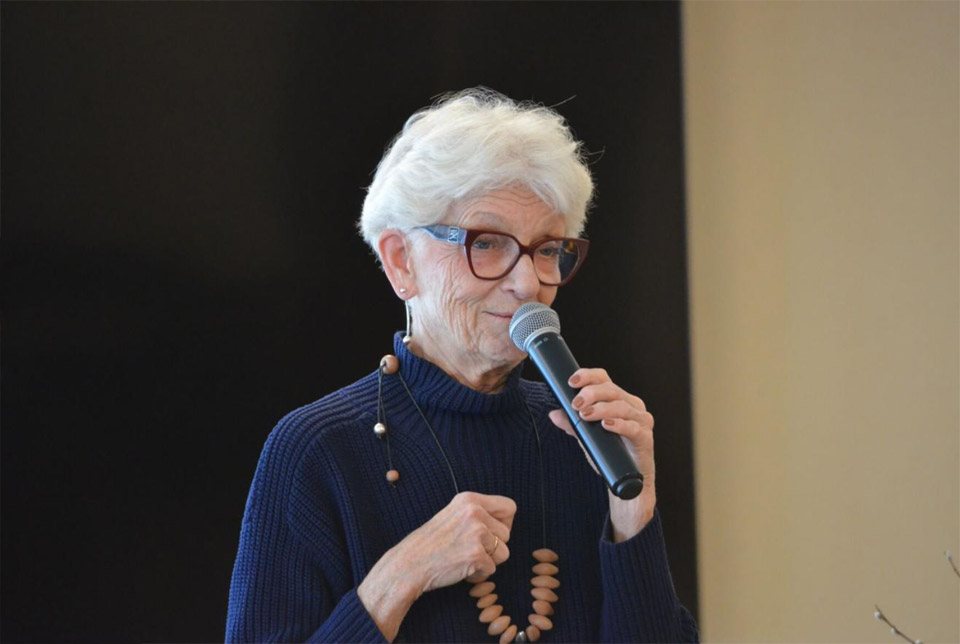
In honor of Women’s History Month, the Waters of Edina hosted former Minnesota Lt. Gov. Marlene Johnson March 31. The residents who attended the special “Women’s Social Hour” heard Johnson share the story of her time as Minnesota’s first woman lieutenant governor.
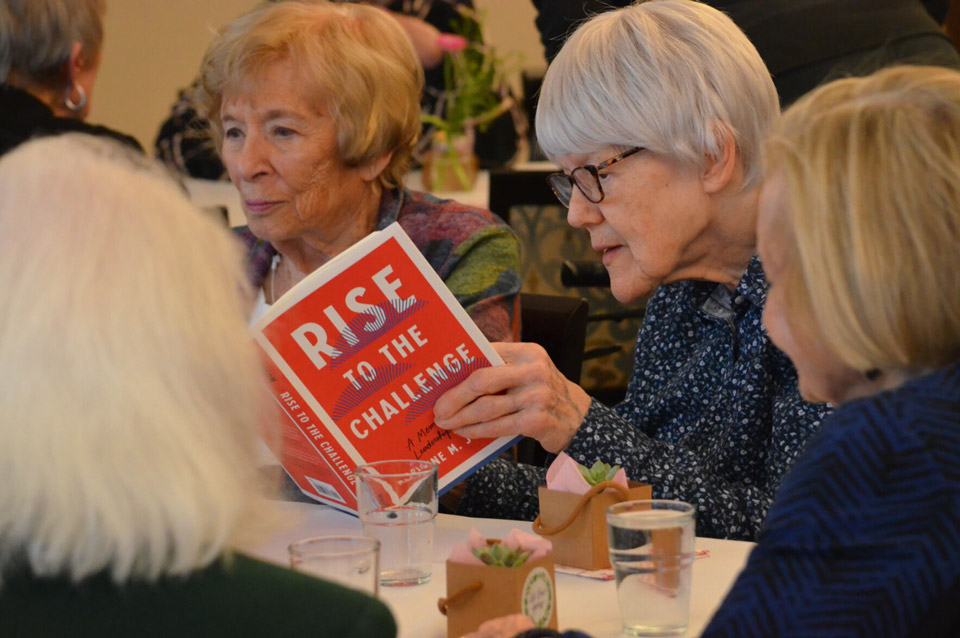
The event was a part of Johnson’s book tour for her memoir, “Rise to the Challenge: A Memoir of Politics, Leadership & Love.” The book details Johnson’s political career and personal life: breaking political ground, navigating patriarchal tradition and persevering through great personal loss.
Johnson, 80, served in Gov. Rudy Perpich’s administration from 1983 until 1991. Since her two terms, every Minnesota lieutenant governor following Johnson has been a woman.
“I would like to go on record as saying, I think it’s enough already. We should have a woman governor,” she said. “It shouldn’t have taken this long.”
Becoming the first
Johnson was invited to be Perpich’s running mate in 1982, but before that she was an entrepreneur, owning a small marketing and public relations firm in St. Paul. During that time Johnson was also “an active feminist,” serving as the chair of the Minnesota Women’s Political Caucus and cofounder of the Minnesota Chapter of the National Association of Women Business Owners.
When Perpich ran in 1982, both the Republican Party and the Democratic-Farmer-Laborer Party rejected having women candidates for lieutenant governor, Johnson said.
“So when Rudy came back from having spent three years in Europe working for Control Data Corporation and decided to run, he decided that having a female running mate would give him a competitive advantage,” Johnson said. “The public had watched both parties reject women candidates, and there was some general annoyance in the population.”
Speculative lists of potential candidates at the time did not include her name on them, Johnson said. But she recalled writing in her journal that, “if Rudy wants to win, he’ll call me.”
Johnson met Perpich three times in 1978 when he was governor (he was in office 1976-1979 before running again in 1982). The first time the two met was after Perpich appointed Rosalie E. Wahl to the Minnesota Supreme Court in 1977 — the first woman to hold the position.
“I decided it was it would be a good thing for women to do a fundraiser for Rudy to say thank you for appointing Rosalie Wahl to the Supreme Court,” Johnson said. “I called up the campaign and said I wanted to do a fundraiser at my apartment for women, and we got 50 women to show up. I think we payed $25 a piece to come, I mean, it was nothing. But in 1978, it was the first time there had ever been an all women’s fundraiser.”
Perpich called up Johnson and asked her to run on the ticket with him “at a little delicatessen not so far from here.”
“It was a very interesting, unexpected primary election in Minnesota,” she said. “We’d only won that primary by fewer 25,000 votes, and we were outspent. The party spent $1 million, and we spent $100,000. So I was pretty exciting.”
Johnson’s work
Not only was she the first female lieutenant governor, but Johnson said she was the first lieutenant governor “who was elected with a portfolio of work that the governor was assigning and publicly talking about.”
“There were a couple of things I was supposed to do. One was to chair an open appointments commission,” Johnson said. “Secondly, I was supposed to direct the state’s tourists and marketing program, because our whole campaign overall was economic development and creating more jobs. Minnesota was really suffering from an economic downturn at that point. And so we really believed that tourism should be a very important part of our economic development strategy. So for the first time, we had somebody at that level who was really creating a stronger strategy for promoting tourism Minnesota.”
One of the first things Johnson worked on was the theme of “exploring Minnesota,” which was even added to Minnesota license plates. She expanded the concept of tourism beyond the hospitality industry, opening the conversation to parks and recreation, sports teams, arts organizations and historical societies.
“Traditionally, the tourism program was the hotels and restaurants. They wanted a marketing program at the state level, but they thought they were it. And in my mind, they were an important part of it, but it was also the state parks. It was also the professional sports. It was also the orchestras and the museums, the historical society, the parks and trails, all of those,” Johnson said. “So I invited all of those people to the same meeting. And the first time they were all in the same meeting, they were all in shock, like, ‘Who are these people?’ But by the end of our time together, over eight years, people started understanding how much better it was to really integrate and see tourism as truly a statewide thing.”
After her second term as lieutenant governor, Johnson made a transition to Washington, D.C., and worked with the Clinton administration for a short time. Johnson later served as the executive director and CEO of NAFSA: Association of International Educators, the world’s largest nonprofit association dedicated to international education.
When asked what she is up to these days, Johnson said she is about 18 months into her book tour and will keep doing it “as long as there are groups of people willing and interested in inviting me.” She said she already has an idea for another book, but isn’t quite ready to sit behind the computer again to write it.